You are the block's financial counter already
Cash, credit on a tab, a phone top-up, a money transfer. Crypto is the next item on a list your store has been adding to for years.
A bodega is not just a shop — it is the block's counter. People cash things here, send things from here, ask questions here. Crypto is the service that fits that role most naturally and pays the most for it.
$150.00
USDT · sent home by a regular
The reason kiosk operators chase bodegas is not the floor space. It is that a corner store is the most trusted commercial address on its block, open when nothing else is, run by someone whose name the customers know. That trust is the actual asset, and a machine in the corner rents it rather than using it.
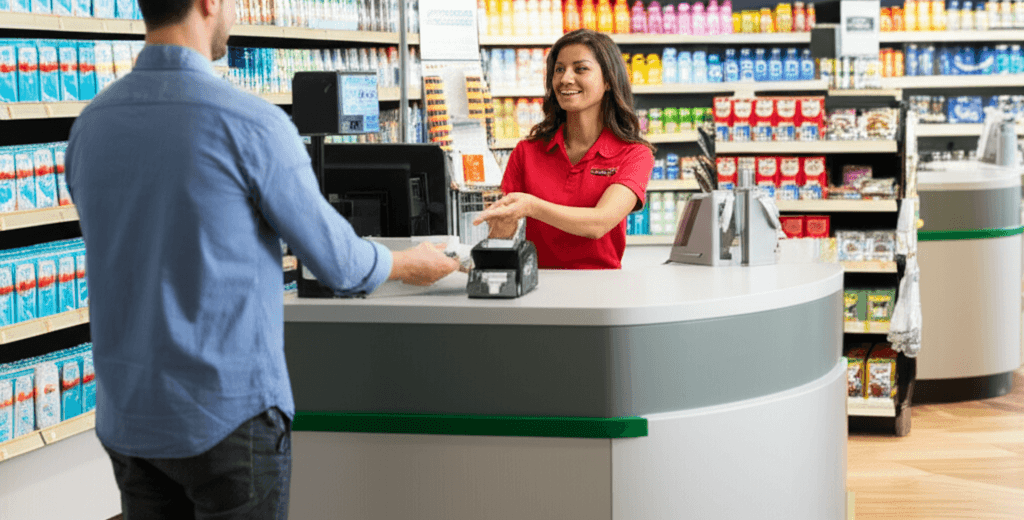
A counter service uses it directly. When the owner or the clerk runs the transaction, the customer is buying from a person they have known for years — which matters enormously to someone making their first crypto purchase and quietly worried about being cheated.
It also matters commercially. First crypto purchases in immigrant and cash-heavy neighbourhoods are overwhelmingly driven by word of mouth, and word of mouth travels through exactly the network a bodega sits at the centre of.
Why it fits
Every store type in this program runs the same platform. What changes is the customer, the ticket size and the objection — so this is the part written for you rather than for everybody.
Cash, credit on a tab, a phone top-up, a money transfer. Crypto is the next item on a list your store has been adding to for years.
Where families send money home weekly, USDT and USDC are already part of the conversation. Being able to serve it is a genuine differentiator on your street.
A customer who would never complete a crypto app in English will complete a two-minute onboarding with someone who speaks to them the way you do.
Nothing gets bolted down, plugged in or insured. If you move, the service moves with you.
Getting started
Where the store is, what it already offers, and what your foot traffic looks like. We tell you straight away whether we can serve your market.
Entity documents, ownership and any licences your store already holds. Days, not months.
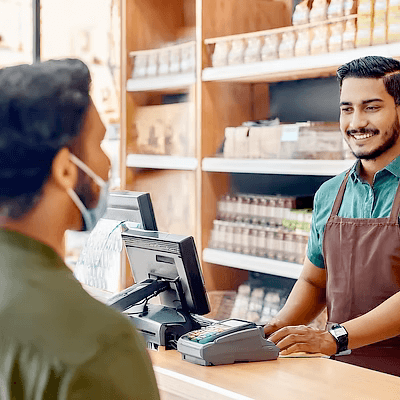
One session per employee. No crypto knowledge required — the order screen is shorter than a money order form.
Logins switched on, revenue share accruing on every order your staff place.
The arithmetic
You keep a share of every order. Bigger order, bigger share. The examples below use 1% to 3% — your own rate is in your agreement.
| At the counter | Order size | Store keeps (low) | Store keeps (high) |
|---|---|---|---|
| A customer cashes a check and puts part of it into Bitcoin | $200 | $2.00 | $6.00 |
| A regular buys USDT to send to family overseas | $500 | $5.00 | $15.00 |
| A customer sells crypto and takes the cash | $1,000 | $10.00 | $30.00 |
| A small business owner buys on payday, every other week | $2,500 | $25.00 | $75.00 |
| One larger order, the kind an ATM's daily cap refuses | $10,000 | $100.00 | $300.00 |
The figures above are worked examples, not projected or guaranteed earnings. They show how the arithmetic works on a given order size at an illustrative revenue-share range. Your actual rate is set in your agent agreement, and what any individual store earns depends on its foot traffic, its neighbourhood, its hours and how many customers it serves. Anytime Capital does not promise any level of income.
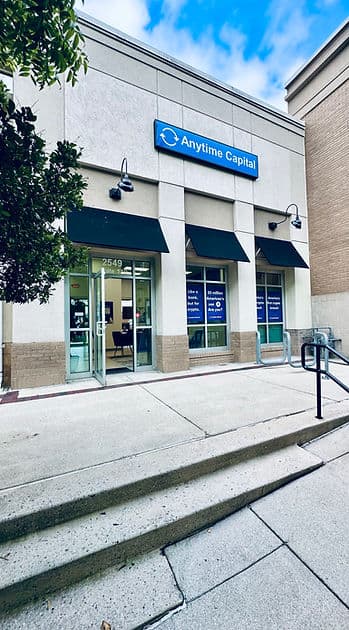

Anytime Capital runs its own branches in Atlanta and Miami. Partner stores run the same counter service.
Crypto adoption in dense urban neighbourhoods does not spread evenly — it spreads through networks. One customer who has a good experience brings a cousin, and the cousin brings a coworker, and within a couple of months a single store can be serving a recognisable cluster of the same extended families and workplaces.
That is why a corner store can out-perform a much larger retailer on this product. Reach is not the variable. Trust density is.
It also means the first few customers matter more than the marketing. A store that takes time over its first ten orders — explaining the price, showing the delivery, being patient with a slow verification — usually finds it does not have to do much explaining after that.
A large share of bodega customers are underbanked or thin-file. For them, most crypto platforms are simply closed: the sign-up asks for a bank account or a card they do not have, and the process ends there.
A store counter is the route that works, because the payment method is cash and the identity check is done in person with the customer's own document. That is the entire reason the kiosk industry has the footprint it has.
The customer still needs a wallet to receive the asset. Anyone without one can be set up with a free non-custodial Anytime Capital wallet in moments. The crypto lands somewhere they control, not in an account they might lose access to.
Keep reading
The numbers, the rules and the alternative you have probably been offered.
No. There is no equipment to fit and no floor space required, so a single-register corner store runs the same program as a multi-lane retailer.
It is an advantage. The person your customer trusts is the one behind your counter, and the reason a store counter beats an app for these customers is precisely that the explanation happens in the language they actually use.
Yes. Each person gets their own login. Orders stay attributable to whoever placed them, which is useful even in a two-person store.
They can be set up with a free non-custodial Anytime Capital wallet in moments, and they hold their own keys.
Not to act as a serving location for Anytime Capital's platform. Anytime Capital is the registered money services business and carries the compliance programme for the activity. What applies to your specific store and state is confirmed during onboarding, and nothing here is legal advice.
A share of each order, set in your agent agreement. Because crypto is priced as a percentage of the order rather than a flat fee, the revenue moves with the ticket. The earnings page works the arithmetic through at five order sizes.
Tell us where the store is and what your customers keep asking for. We will tell you what we can offer at your location.